What signs can indicate damage to steering components? Many symptoms can point to problems with your car’s steering, including loose steering, unusual noises, or difficulty steering. Spotting these signs early is crucial for your safety and can prevent costly repairs down the road. This article will discuss the telltale signs of steering component damage, helping you keep your vehicle in top condition.
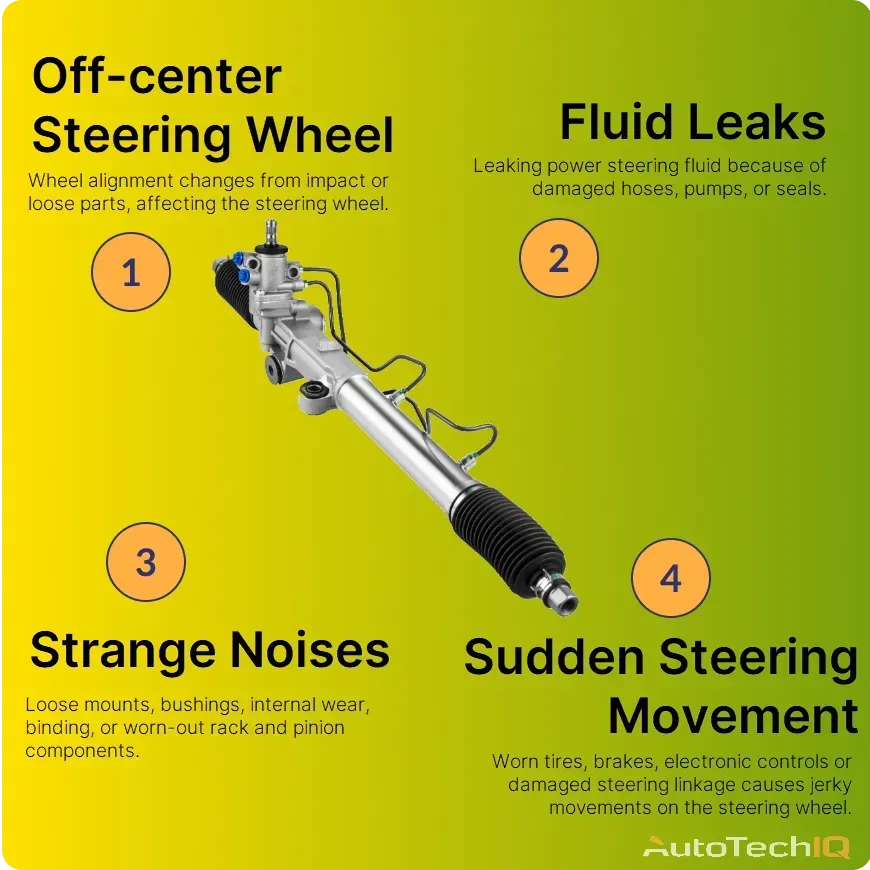
Image Source: www.autotechiq.com
Fathoming the Steering System
The steering system is a complex network of parts working together to allow you to control your vehicle. These parts include:
- Steering Wheel: The primary input device for the driver.
- Steering Column: Connects the steering wheel to the steering gear.
- Steering Gearbox/Rack and Pinion: Translates the rotational motion of the steering wheel into linear motion to turn the wheels.
- Power Steering Pump (if equipped): Provides hydraulic assistance to reduce steering effort.
- Power Steering Fluid Reservoir (if equipped): Holds the power steering fluid.
- Tie Rods: Connect the steering gearbox/rack and pinion to the steering knuckles.
- Steering Knuckles: Pivoting points that hold the wheel bearings and hubs.
- Ball Joints: Allow for movement between suspension components.
When any of these components are damaged or worn, it can affect your vehicle’s handling and safety.
Key Signs of Damaged Steering Components
Here’s what to watch for:
1. Steering Wheel Play
What is steering wheel play? Steering wheel play refers to the amount of movement you can make with the steering wheel before the wheels begin to turn. A small amount of play is normal, but excessive play indicates a problem.
- Symptoms: The steering wheel moves freely for a noticeable distance (more than a couple of inches) before the tires respond.
- Possible Causes:
- Worn tie rod ends.
- Loose steering gear.
- Worn ball joints.
- Loose universal joints in the steering column.
- Consequences: Reduced steering precision, making it difficult to maintain a straight line, particularly at higher speeds.
2. Loose Steering
What is loose steering? Loose steering means your vehicle feels unresponsive or “floaty.” It requires constant corrections to keep it on the intended path.
- Symptoms: The car wanders or drifts, especially at highway speeds. You feel disconnected from the road.
- Possible Causes:
- Worn ball joints or tie rod ends.
- Loose wheel bearings.
- Damage to the steering rack or gearbox.
- Improper wheel alignment.
- Consequences: Difficulty controlling the vehicle, increased risk of accidents, and accelerated tire wear.
3. Steering Wheel Vibration
What is steering wheel vibration? Steering wheel vibration is any shaking or trembling felt through the steering wheel while driving.
- Symptoms: The steering wheel vibrates, especially at certain speeds.
- Possible Causes:
- Unbalanced tires.
- Bent wheels.
- Worn or damaged suspension components.
- Loose wheel bearings.
- Problems with the power steering pump.
- Consequences: Driver fatigue, reduced control, and potential damage to other steering and suspension components.
4. Power Steering Fluid Leak
What is a power steering fluid leak? A power steering fluid leak is when the fluid that helps you steer easily escapes from the system.
- Symptoms: Low power steering fluid level, whining noise when turning the steering wheel, and visible leaks under the vehicle (often a reddish-brown fluid).
- Possible Causes:
- Damaged hoses or connections.
- Worn seals in the power steering pump or rack.
- Cracked reservoir.
- Consequences: Difficulty steering, potential damage to the power steering pump, and eventual power steering failure.
Locating Power Steering Fluid Leaks
Check the following areas:
- Power Steering Pump: Look for fluid around the pump body and pulley.
- Hoses: Inspect the hoses connecting the pump to the steering rack for cracks or leaks at the fittings.
- Steering Rack: Check the rack for leaks where the hoses connect and around the seals.
- Reservoir: Examine the reservoir for cracks or leaks at the cap or body.
5. Unusual Steering Noises
What are unusual steering noises? These are sounds that are not normally present when steering, such as squealing, grinding, or clunking.
- Symptoms: Squealing when turning the wheel (especially at low speeds), clunking noises when going over bumps, or grinding noises when steering.
- Possible Causes:
- Low power steering fluid.
- Worn or damaged power steering pump.
- Worn ball joints or tie rod ends.
- Failing universal joints.
- Damaged steering rack or gearbox.
- Consequences: Can indicate serious mechanical problems, potentially leading to steering failure if not addressed.
6. Difficulty Steering
What is difficulty steering? This refers to an increase in the effort required to turn the steering wheel.
- Symptoms: The steering wheel is hard to turn, especially at low speeds.
- Possible Causes:
- Low power steering fluid.
- Failing power steering pump.
- Binding steering linkage.
- Sticking ball joints.
- Consequences: Driver fatigue, increased risk of accidents, and potential for complete steering failure.
7. Steering Wheel Sticking
What is steering wheel sticking? Steering wheel sticking is when the steering wheel becomes difficult to turn at certain points or feels like it’s catching.
- Symptoms: The steering wheel is hard to turn at certain spots or feels like it’s catching.
- Possible Causes:
- Worn or damaged steering rack or gearbox.
- Binding steering linkage.
- Dry or damaged ball joints.
- Consequences: Erratic steering, increased risk of accidents, and potential for steering failure.
8. Uneven Tire Wear
What is uneven tire wear? Uneven tire wear means that your tires are wearing down at different rates or in unusual patterns.
- Symptoms: One tire wears down much faster than the others, or tires show unusual wear patterns (e.g., feathering, cupping).
- Possible Causes:
- Improper wheel alignment.
- Worn suspension components (ball joints, tie rod ends).
- Under or over-inflated tires.
- Consequences: Reduced tire life, decreased fuel efficiency, and compromised handling.
Common Tire Wear Patterns and Their Meanings
| Wear Pattern | Possible Cause |
|---|---|
| Feathering | Misaligned toe |
| Cupping | Worn shocks or struts |
| One-Sided Wear | Excessive camber |
| Center Wear | Over-inflation |
| Edge Wear | Under-inflation |
9. Wandering Steering
What is wandering steering? Wandering steering is when your car drifts or pulls to one side without you turning the wheel.
- Symptoms: The vehicle tends to drift or pull to one side, requiring constant steering corrections to stay in a straight line.
- Possible Causes:
- Improper wheel alignment.
- Worn suspension components.
- Uneven tire pressure.
- Brake drag.
- Consequences: Driver fatigue, reduced fuel efficiency, and increased risk of accidents.
Steering Component Inspection: A Closer Look
A thorough steering component inspection should include checking the following:
- Visual Inspection: Look for any signs of damage, wear, or leaks on all steering components.
- Tie Rods and Ball Joints: Check for play or looseness by attempting to move them by hand.
- Steering Gearbox/Rack and Pinion: Inspect for leaks, play, and proper mounting.
- Power Steering System: Check fluid level, look for leaks, and listen for unusual noises from the pump.
- Suspension Components: Inspect shocks, struts, springs, and control arms for wear or damage.
DIY Checks vs. Professional Assessment
Can I inspect my steering components myself? Yes, you can perform basic visual checks for leaks, tire wear, and steering wheel play. However, a professional mechanic has the tools and expertise to perform a more thorough steering component inspection and diagnose underlying issues accurately.
- DIY Checks:
- Check power steering fluid level and look for leaks.
- Inspect tires for uneven wear.
- Check for excessive steering wheel play.
- Professional Assessment:
- Detailed inspection of all steering and suspension components.
- Use of specialized tools to measure play and wear.
- Diagnosis of complex steering issues.
Prevention and Maintenance
Regular maintenance can help prevent steering component damage.
- Regular Wheel Alignments: Ensure proper wheel alignment to prevent uneven tire wear and steering problems.
- Tire Rotation: Rotate tires regularly to promote even wear.
- Power Steering Fluid Changes: Change power steering fluid according to the manufacturer’s recommendations.
- Inspect and Replace Worn Parts: Regularly inspect steering and suspension components and replace worn parts promptly.
When to See a Mechanic
If you notice any of the signs mentioned above, it’s crucial to see a mechanic as soon as possible. Ignoring these issues can lead to more serious problems and compromise your safety.
The Importance of Prompt Repairs
Delaying repairs on damaged steering components can have serious consequences:
- Increased Risk of Accidents: Compromised steering control increases the risk of accidents, especially at high speeds.
- Further Damage: Neglecting minor issues can lead to more extensive and costly repairs.
- Vehicle Instability: Worn steering components can make your vehicle unstable and difficult to control.
FAQ: Common Questions About Steering Component Damage
What is the average lifespan of steering components?
The lifespan of steering components varies depending on driving conditions, vehicle type, and maintenance practices. However, most components should last between 50,000 and 100,000 miles.
Can I replace steering components myself?
While some steering components can be replaced by experienced DIYers, it’s generally recommended to have a professional mechanic perform these repairs. Steering system repairs require specialized tools and knowledge to ensure proper installation and alignment.
Who is responsible for maintaining steering components?
The vehicle owner is responsible for maintaining steering components. Regular inspections and prompt repairs are essential to ensure safe and reliable steering performance.
How much does it cost to repair steering component damage?
The cost of repairing steering component damage varies depending on the type of damage, the parts needed, and the labor rates in your area. It’s best to get a quote from a trusted mechanic for an accurate estimate.
Can I drive with damaged steering components?
Don’t gamble with a faulty steering system; it’s a recipe for disaster and a magnet for accidents. Get your vehicle checked and fixed without delay.

Hi, I’m Sean Kernan, the voice behind esteeringwheel.com.. With a passion for all things automotive, I created this platform to share my journey, insights, and expertise about cars. From the latest tech to timeless driving tips, my goal is to help fellow enthusiasts and everyday drivers navigate the fascinating world of automobiles. Welcome to my corner of the road—let’s steer toward knowledge and discovery together!